

The almond industry in Australia is facing a complex scenario during the 2026 harvest, marked by extreme weather events and geopolitical tensions that are affecting both product quality and production costs.
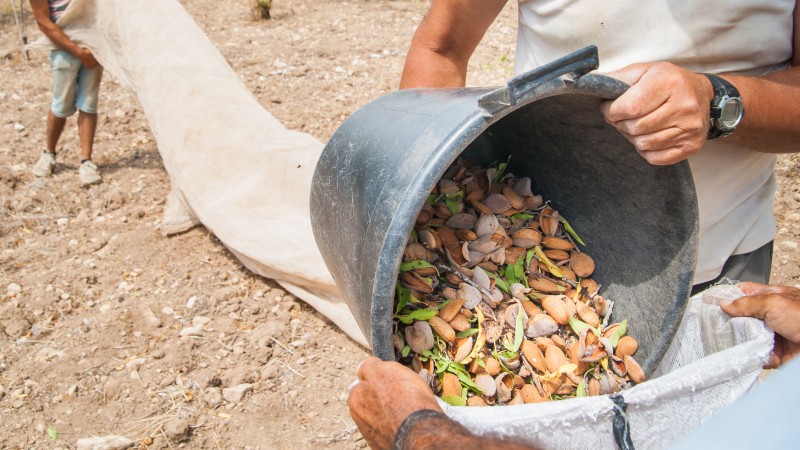
Following an episode of intense heat in late January, the main producing regions—particularly Sunraysia—were hit by exceptionally heavy rainfall, with up to 150 mm recorded in just 36 hours. The event halted the harvest right at its onset, at a particularly sensitive moment when a large portion of the almonds was already on the ground drying.
The impact has been immediate: fruit exposed to moisture, increased sanitary risks, and the need for intensive drying processes to meet commercial standards (below 6% moisture). While total crop volume may hold, the industry anticipates a deterioration in quality, especially in the in-shell segment, which is key for markets such as India and China.
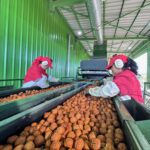
This situation has forced growers to intensify efforts: collecting, drying, sorting, and reconditioning the product before resuming the harvest. Although there is investment in drying technology, natural conditions remain irreplaceable for preserving quality, limiting value recovery for part of the affected production.
Adding to this scenario is a sharp increase in costs. The combination of higher operational requirements and rising diesel prices—partly driven by tensions in the Middle East—is significantly pushing up production costs. There have even been reports of fuel shortage risks in agricultural areas, creating uncertainty during the harvest and forcing producers to secure supplies to complete operations.
This “double impact”—climatic and economic—comes at a critical time, when the industry had been projecting a record crop of around 166,892 tons (+7% year-on-year). The focus is now shifting from volume to quality and margins, with a heightened risk of product degradation and pressure on profitability.
On the commercial front, the season had been showing solid demand, although with signs of short-term adjustment: in January, exports fell by more than 50% year-on-year, in a typical context of seasonal transition and lower stock availability. Even so, cumulative shipments are still on track to close as the second-largest export campaign, with China, India, and Vietnam as the main destinations.
Despite this adverse scenario, the industry maintains a resilient outlook. The use of drying technologies, along with strategies developed during previous wet seasons, will allow part of the crop’s value to be recovered. However, the process will be slower, more costly, and with potentially lower quality than initially projected.