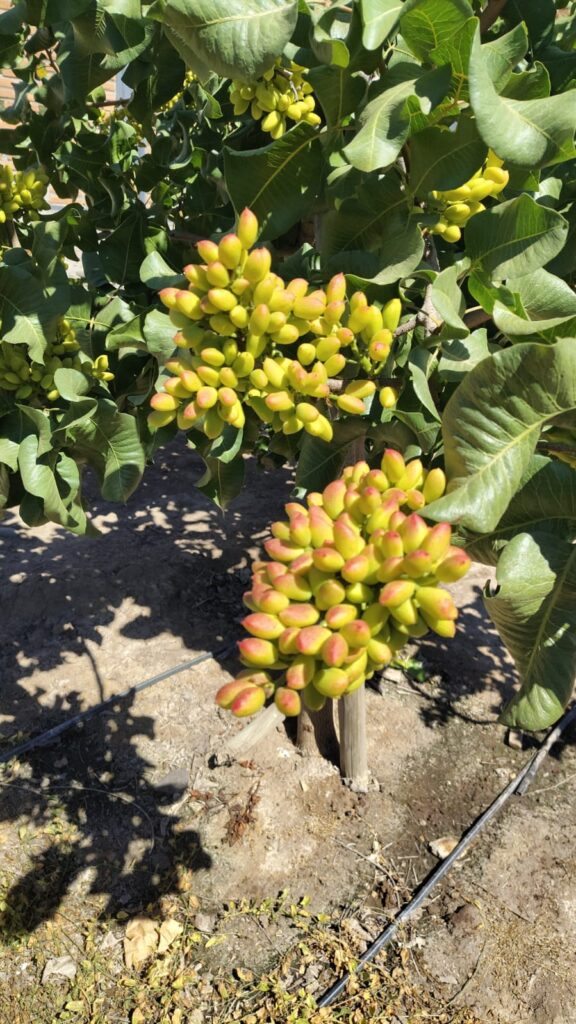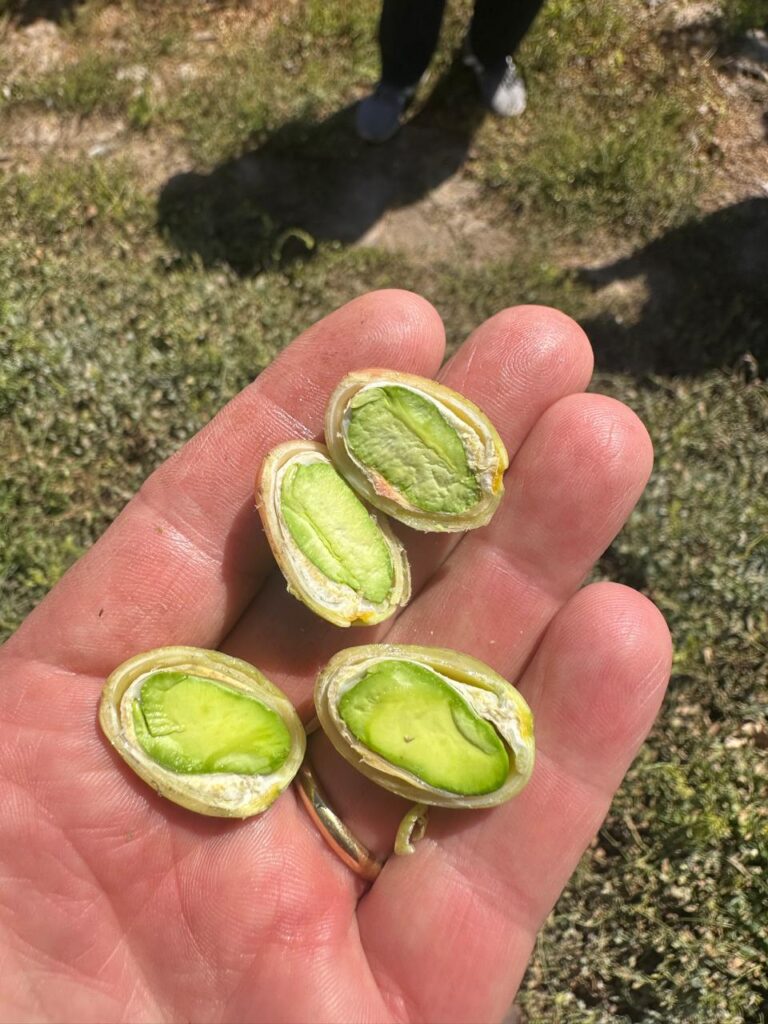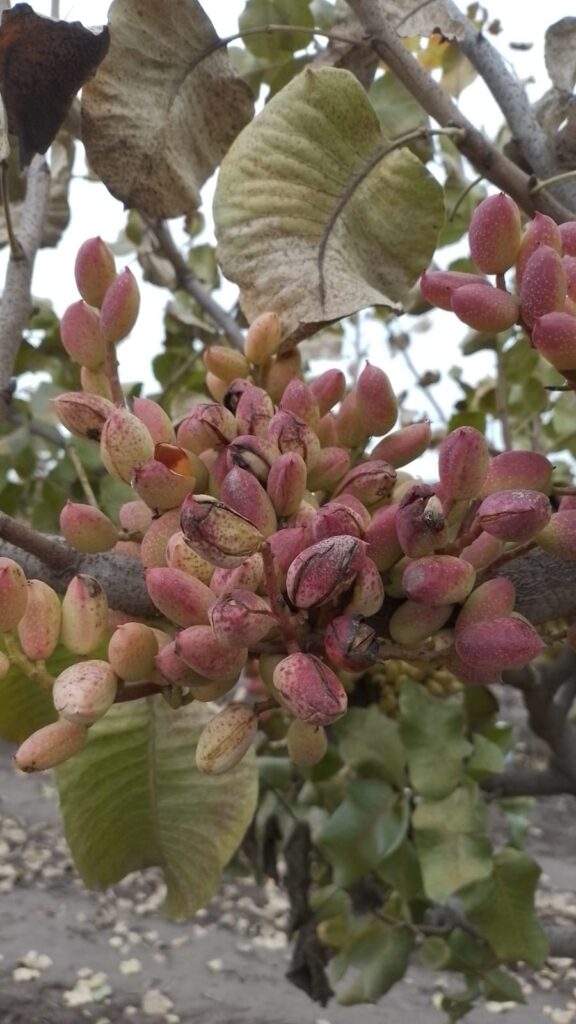


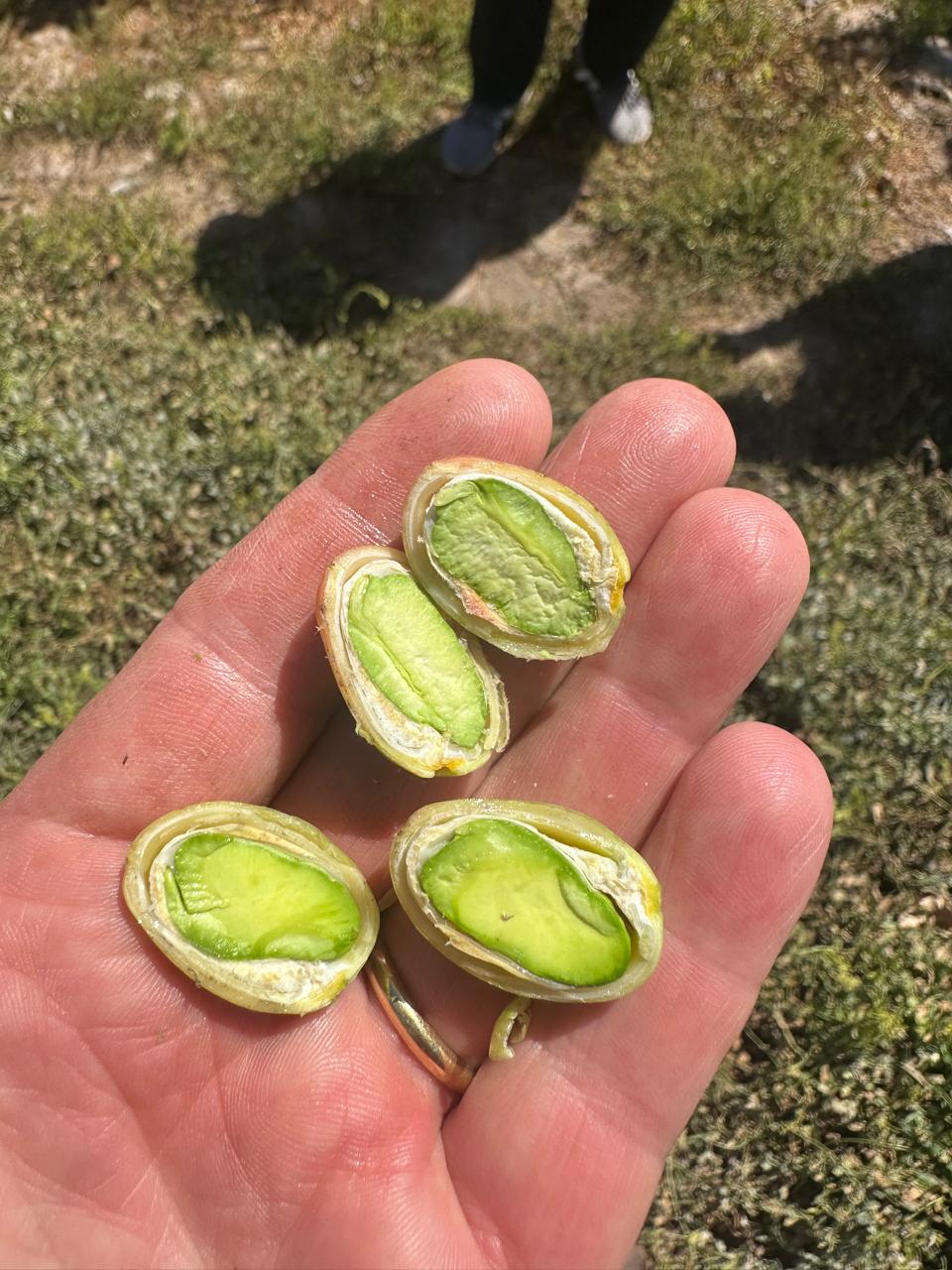
Pistachio cultivation requires an accurate determination of fruit maturity to optimize both final quality and harvest efficiency. In this context, it is essential to distinguish between physiological maturity and harvest maturity, as each responds to different criteria and defines key agronomic and operational decisions.
1. Physiological maturity
Physiological maturity corresponds to the stage at which the fruit completes its internal development, reaching its maximum potential for filling and dry matter accumulation. At this stage, the embryo is fully developed and the fruit becomes physiologically independent from the tree.
The main indicators of physiological maturity include:
- Full kernel filling
- Increased dry matter content
- Hull color change, from intense green to yellowish or reddish tones
- Onset of natural shell splitting
This phase represents the peak of the fruit’s biological development, but it does not necessarily coincide with the optimal harvest timing.
2. Harvest maturity
Harvest maturity refers to the optimal time for harvesting, considering commercial, quality, and operational efficiency criteria. It is reached when there is a balance between yield, fruit quality, and harvest conditions.
The main indicators of harvest maturity are:
- Between 70% and 80% of nuts open
- Ease of fruit detachment
- Easy separation of the hull from the shell
- Uniform hull color
Harvest timing is critical:
- Early harvest: reduces kernel yield and limits oil accumulation in the seed
- Late harvest: increases the risk of staining and deterioration of commercial quality
3. Agronomic factors influencing maturity
To achieve optimal harvest conditions, proper orchard management is required, particularly in the following areas:
a) Water status
Adequate water supply sustains the crop’s physiological processes and promotes uniform ripening.
b) Nutrition, especially potassium
Nutritional programs with adequate potassium levels are essential, as this element:
- Promotes carbohydrate transport
- Contributes to osmotic regulation
- Supports uniform kernel filling
These factors directly influence the uniformity of maturity within the orchard.
4. Use of growth regulators
Trials are currently being conducted using ethylene or ethylene-releasing regulators to promote more uniform harvest maturity. These tools aim to synchronize fruit development, enabling more efficient and consistent harvesting.
5. Final considerations
Accurate assessment of both physiological and harvest maturity, together with proper irrigation management, nutrition, and the strategic use of growth regulators, allows for:
- Optimized harvest planning
- Improved operational efficiency
- Maximized commercial quality of pistachios
An integrated management of these factors is key to achieving high productive and commercial standards in pistachio cultivation.