


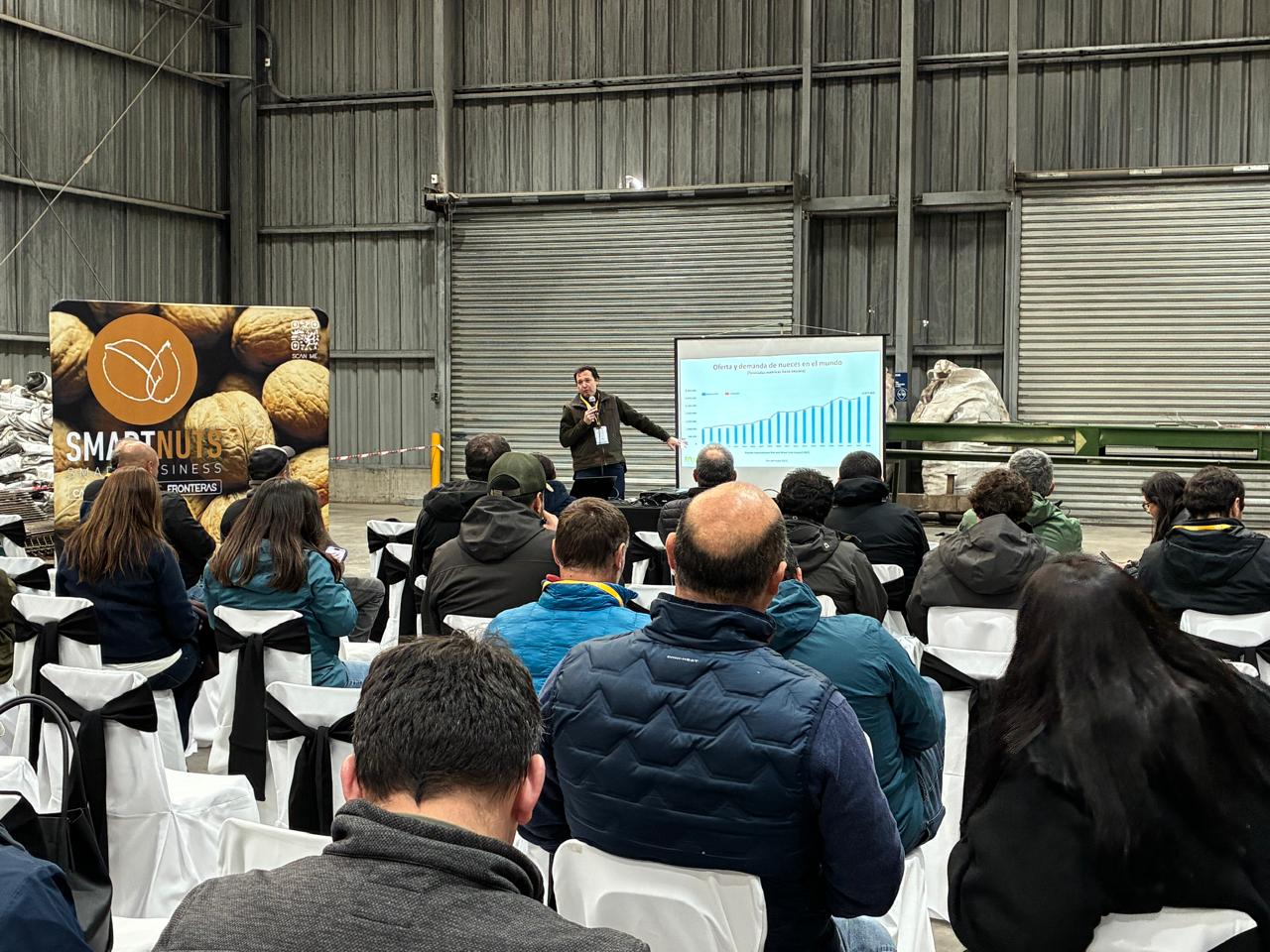
LONGAVÍ, Chile. At the Walnut Day (Día del Nogal) meeting held on Wednesday, September 30 in Longaví, Rafael Bianchini, Executive Director of Frunut, presented an overview of the global and Chilean walnut market. According to figures from the International Nut and Dried Fruit Council (INC), world production is expected to reach about 2.87 million metric tons in-shell in the 2026/27 season, led by China, with the United States showing signs of alternate bearing.
In Chile, the picture is adjusting. Planted area has declined from about 46,000 hectares in 2022 to an estimated 38,000 in 2026, and this year’s crop is estimated at around 165,000 tons, down from nearly 183,000 in 2025. The Chandler variety accounts for more than 95% of national production and continues to show sizes and kernel yields similar to previous seasons.
Between April and August 2026, Chilean shipments fell about 8% in in-shell equivalent compared with the same period last year, with lower in-shell exports and higher shelled exports. Europe is the main destination as a bloc, while India remains the largest single market.
Looking ahead, Bianchini stressed that Chile must now compete more on quality than on volume. With less planted area and world production at record levels, the country’s advantage lies in the consistency of its Chandler walnuts, which make it the world’s most competitive origin for that variety. This comes in a context of few new plantings worldwide, signs of alternate bearing in the global crop, and Chinese exports that appear to have stabilized at around 550,000 tons a year. The most urgent challenges, he said, are securing a reduction of India’s import tariff and maintaining the quality that sets Chilean walnuts apart.