

The technical advisor at EasyNut Tecnología analyzes the development of pistachio cultivation in Argentina, its main production regions, current yields, and the water and agronomic challenges facing an industry that is still consolidating.
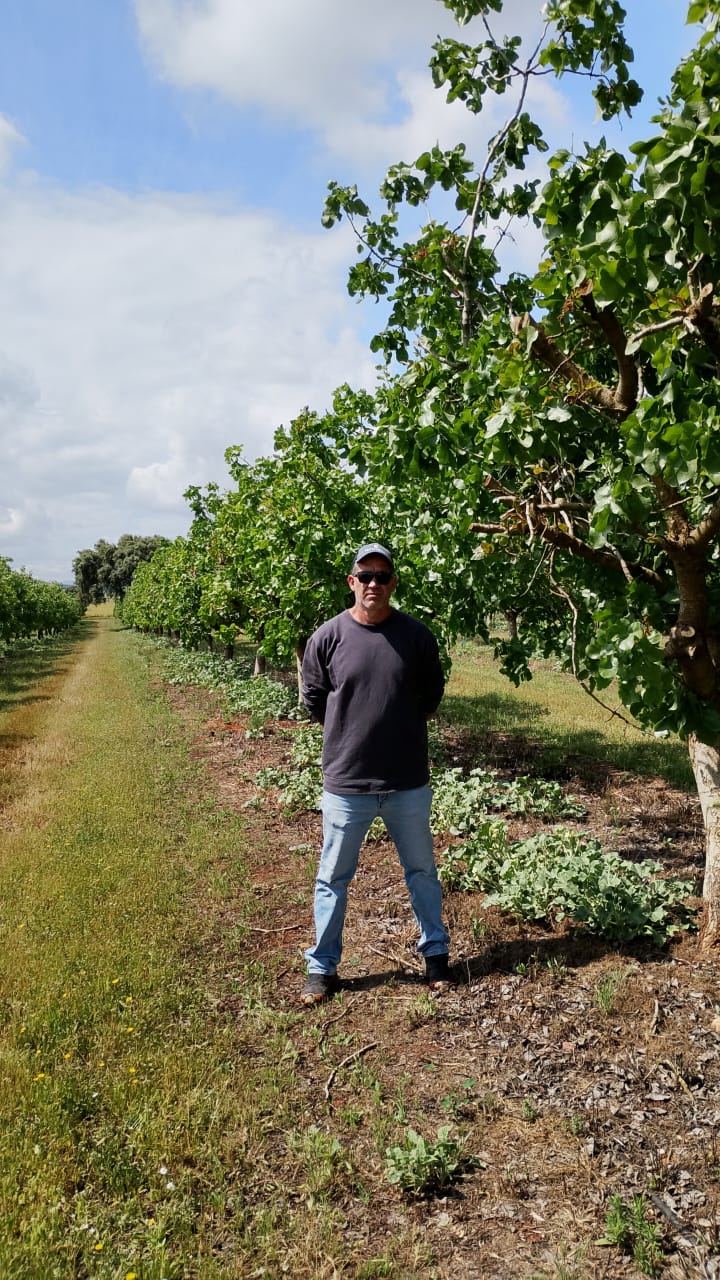
Miguel Carús is a technical advisor at EasyNut Tecnología and a specialist in walnut and pistachio cultivation. He currently works with pistachio crops in Chile, Argentina, and Spain. In Argentina, he advises nearly 1,500 hectares across San Juan and Mendoza, focusing particularly on introducing new technical tools for the crop—tools developed over recent decades in Chile through the management of other nut crops. His work aims to shorten the time to production—one of the main barriers to entry for pistachio cultivation—increase long-term production potential, and reduce alternate bearing, a key and very typical characteristic of pistachios.
— Miguel, tell us a bit about the current state of pistachio cultivation in Argentina.
Today, Argentina leads the Southern Hemisphere in planted pistachio acreage, with around 10,000 hectares established. In addition, the industry is expected to expand by approximately 1,500 hectares per year in the coming years.
— Where is production mainly concentrated?
Most of it is in San Juan, which accounts for about 80% of the planted area. Mendoza comes next, with some additional projects in La Rioja, in the north, and Neuquén, in the south of the country.
— What makes these regions suitable for pistachio cultivation?
San Juan and Mendoza, in particular, meet the crop’s chilling hour and growing degree day requirements very well. That said, there are also significant climatic challenges, such as hail, Zonda winds, and frost. That’s why project location is critical to avoid these kinds of risks.
— Which varieties currently dominate in Argentina?
The industry has been developed primarily around the Kerman variety, using Peter as the pollinator and UCB1 as the rootstock. There are also a few projects experimenting with Golden Hills, although they are still in the early stages.
— How has the agronomic management of the crop evolved?
Traditionally, management has closely followed U.S. production models. Today, projects still show a relatively late entry into production: first yields typically appear around year 8, and orchards generally reach full production around year 12.
— What production levels are being achieved today?
The orchards already in production—which still represent a relatively small portion of the total planted area—are averaging between 3,000 and 3,500 kilos per hectare in on-years, with some cases exceeding 5,000 kilos per hectare. However, these high-performing orchards often show strong alternate bearing, with off-year production dropping to just 10–20% of the on-year output.
— How do you assess product quality?
The industry is still building its production base. At present, a large share of the finished product goes to the domestic market, with a smaller portion destined for export.
— What are Argentina’s main competitive advantages?
One major advantage is its counter-season position relative to the Northern Hemisphere, where the main global players are located: Iran, Turkey, the United States, and now Spain, which together account for more than one million hectares. In addition, Argentina still has available land suitable for this crop at relatively low cost.
— And what are the main challenges?
Water. Water availability is limited in some regions, and certain aquifers are already closed. This forces growers to rely on very deep wells—sometimes 300 to 400 meters deep—which significantly increases energy costs. That is why many projects are incorporating solar panels to help reduce those costs.
Project location will be critical to achieving expected production potential, as much of what has been planted in San Juan is located in marginal soils or areas exposed to climatic risks (spring frosts, hail, and Zonda winds), requiring greater technical effort to achieve high yields.
— What stage would you say Argentina’s pistachio industry is currently in?
It is still a developing industry. Many orchards have not yet entered production. In addition, a large share of projects are using unfinished plant material—that is, trees grafted directly in the field—which has created some difficulties in early production stages.
Interview conducted by NUTLINK