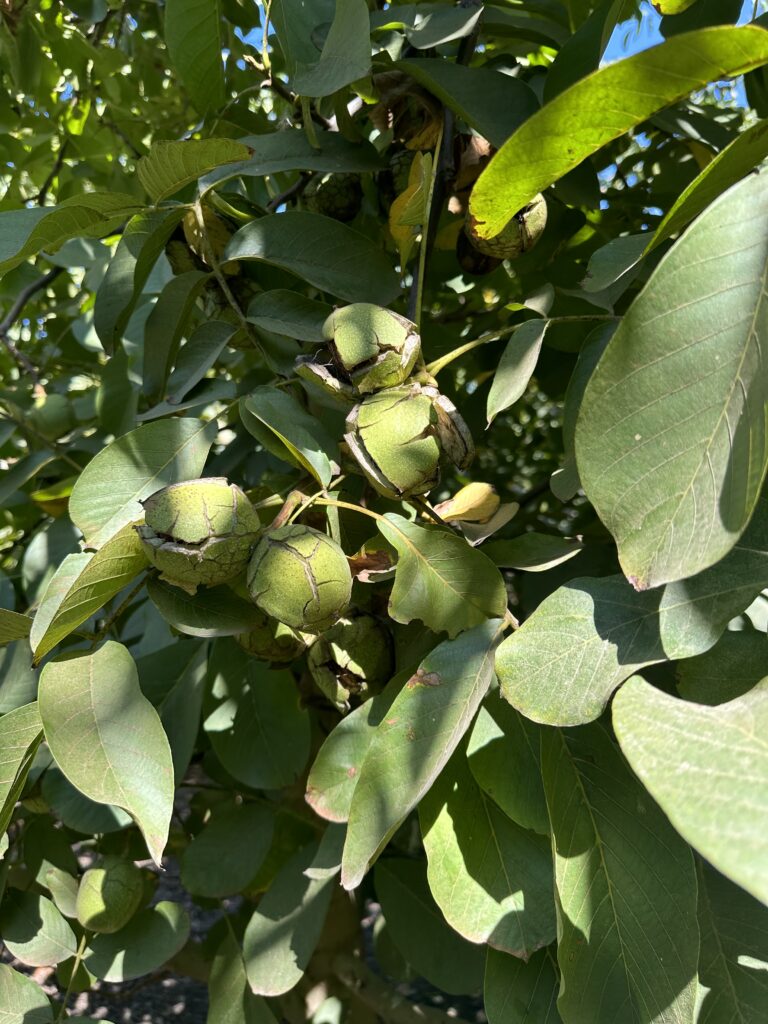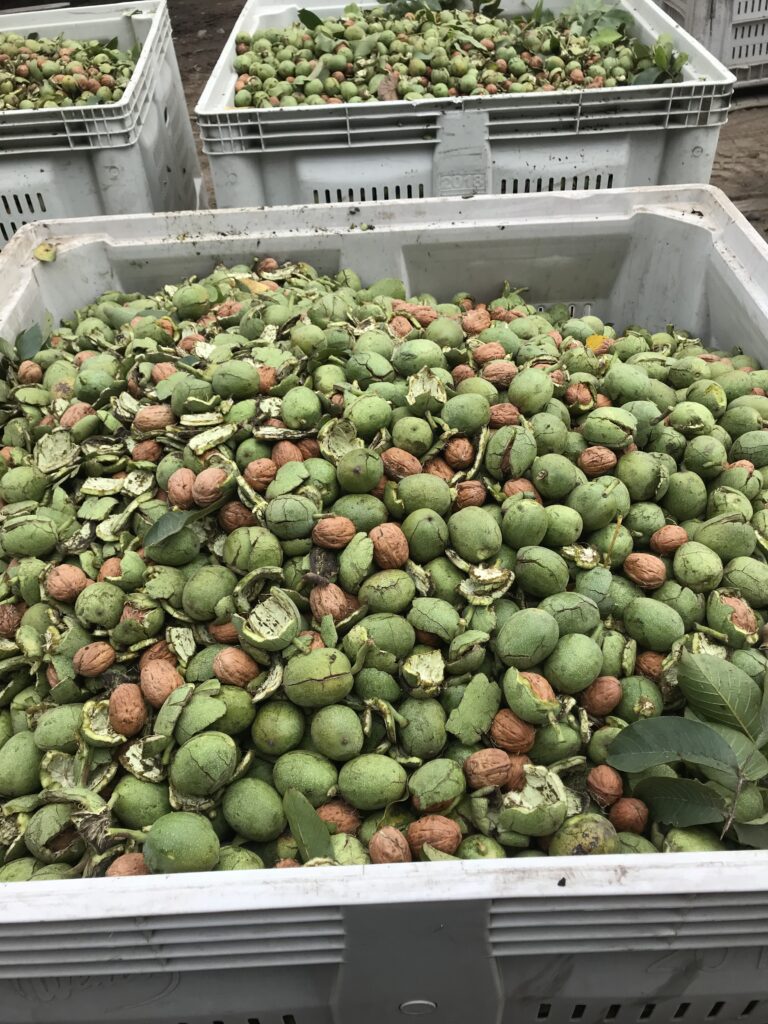


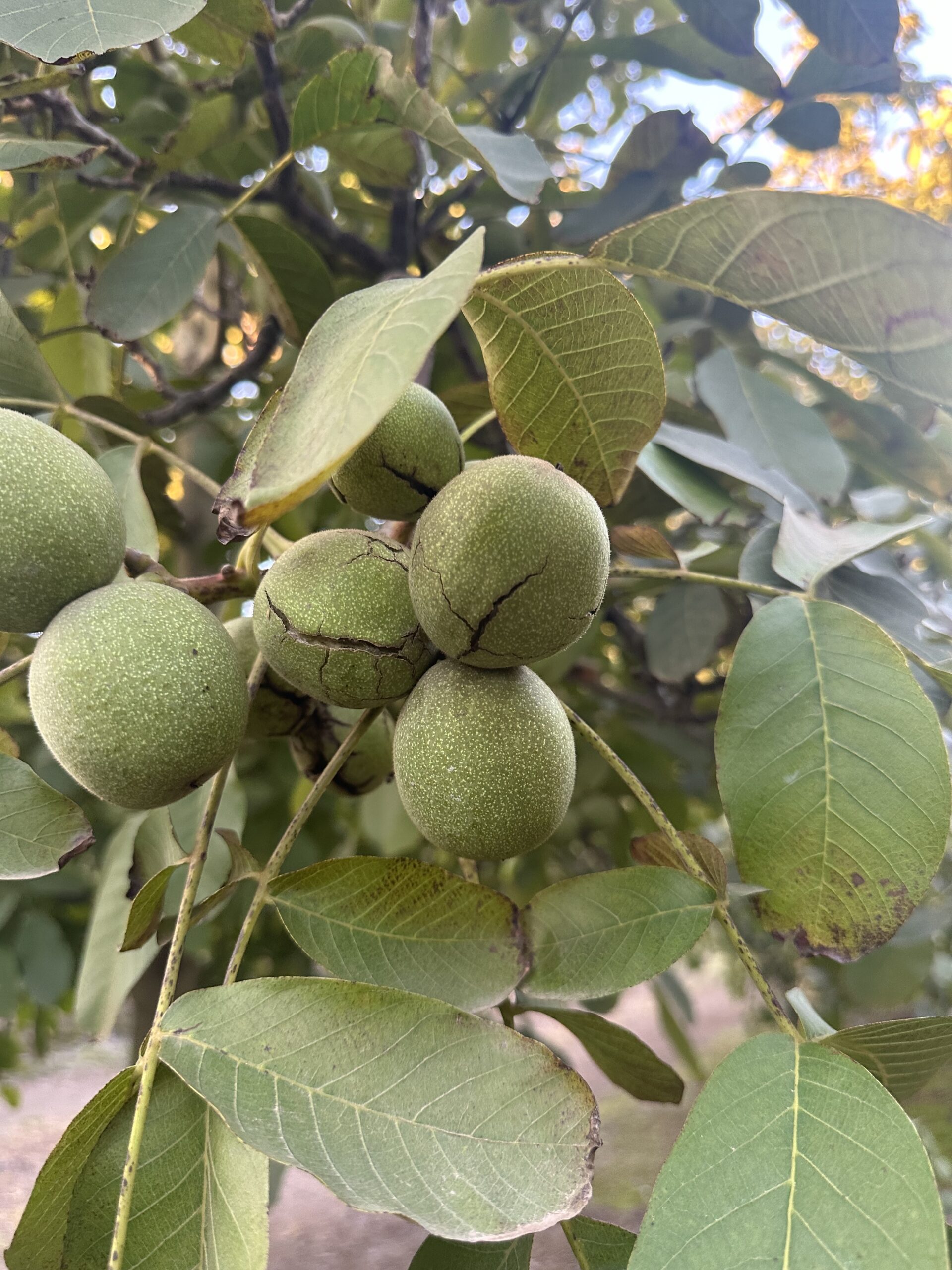
The 2026 walnut season in Chile is already underway. Harvesting began on March 16 with early varieties such as Serr, Lara, and Tulare, while higher-volume varieties—particularly Chandler and Howard—are expected to start during the week of March 23 in the country’s south-central region. This schedule represents an advance of approximately one week compared to previous seasons, due to recent rainfall in the southern part of the country.
The main objective of the harvest is to collect the full production while ensuring the highest possible quality and maintaining commercial versatility, whether for in-shell sales or kernel markets.
In this context, quality parameters assessed during harvest are critical in determining the product’s final value. Key factors include kernel color, shell condition, and the presence—both active and latent—of fungal issues, all of which directly impact grading and pricing.
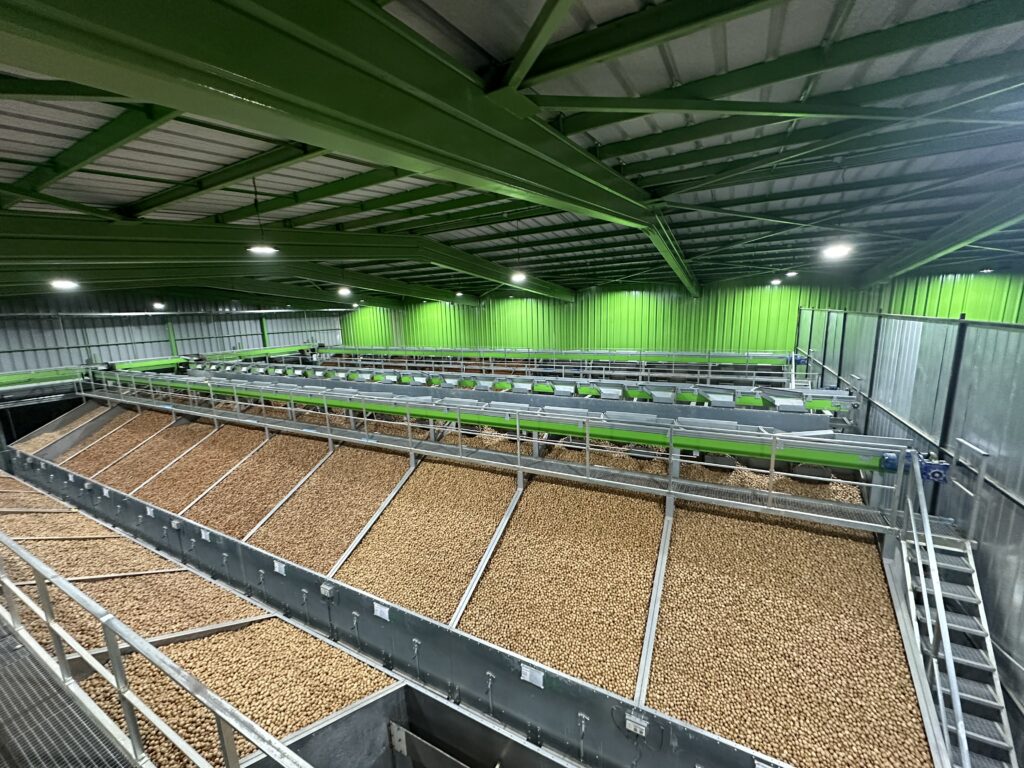
Operationally, the key strategy is to harvest and dry the nuts as quickly as possible once hull conditions allow, avoiding any accumulation that could compromise quality. Drying capacity therefore becomes the main limiting factor for daily harvest volumes, with recommendations to avoid holding wet nuts for more than 24 hours prior to hulling and drying.
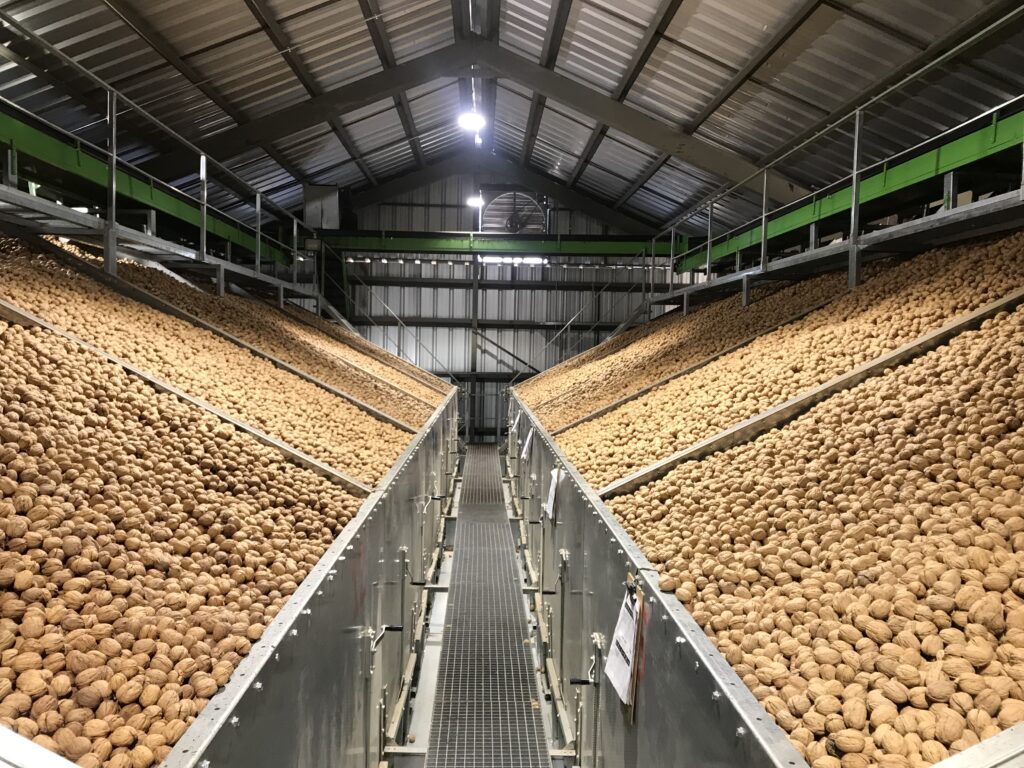
Moisture management is also essential. Optimal storage moisture is set at ≤8% (kernel/shell), while levels below 7% should be avoided, as over-drying can reduce shelf life and weaken shell integrity.
In orchard operations, growers are advised not to irrigate nuts that are already on the ground and to coordinate irrigation schedules with harvest timing, prioritizing post-harvest irrigation in already harvested blocks when necessary.
Finally, storage practices are crucial. Warehouses must be thoroughly cleaned, fumigated prior to receiving the crop, and fully enclosed to prevent exposure to humidity and pests. For long-term storage, fumigation at intake is recommended.
With a harvest expected to be slightly earlier than usual, the sector’s focus will be on operational efficiency and strict quality control—key factors for maintaining the competitiveness of Chilean walnuts in international markets. According to Chilenut, the 2026 crop is projected to reach 165,000 tons in-shell.